Intel’s Advanced Packaging Gains Momentum | SK hynix Adopts EMIB for Next-Generation HBM
Advanced Packaging Demand Accelerates, Driving Supply Chain Diversification
AI accelerators and high-performance computing chips increasingly rely on high-bandwidth memory, while integrating HBM with compute chips requires advanced 2.5D and 3D packaging technologies. As demand for AI chips continues to rise, TSMC’s advanced packaging capacity remains under significant pressure, prompting some market demand to seek alternative packaging suppliers and creating new opportunities for companies such as Intel to expand their advanced packaging businesses.
For memory manufacturers, developing diversified advanced packaging solutions can not only improve capacity flexibility but also help address the growing bandwidth, capacity, and power-efficiency requirements of next-generation HBM.
HBM Advances Toward Higher Bandwidth and 3D Integration
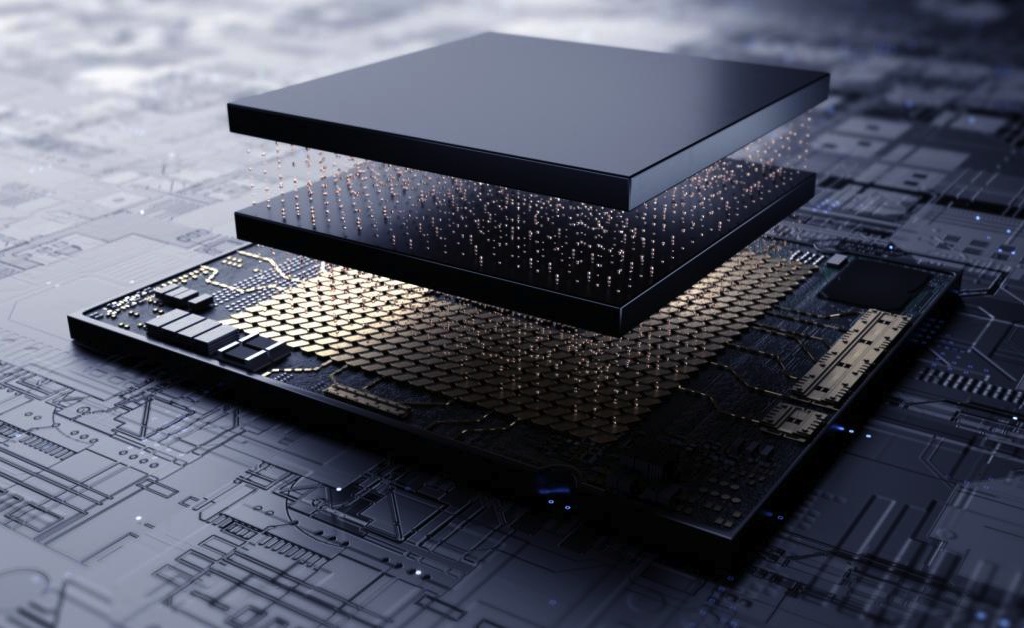
The technology roadmap presented by SK hynix at Hot Chips 2026 indicates that next-generation HBM will continue to increase I/O density and overall bandwidth, while further advancing TSV density, hybrid bonding, and 3D integration. These developments highlight the increasingly important role of advanced packaging in the evolution of HBM products.
As memory stack heights and power densities increase, packaging challenges related to thermal management, mechanical stress, and signal integrity are becoming increasingly complex. Advanced packaging is therefore evolving beyond a backend manufacturing process into a critical technology that directly influences HBM performance and product design.
Intel’s EMIB Expands into the AI Packaging Market
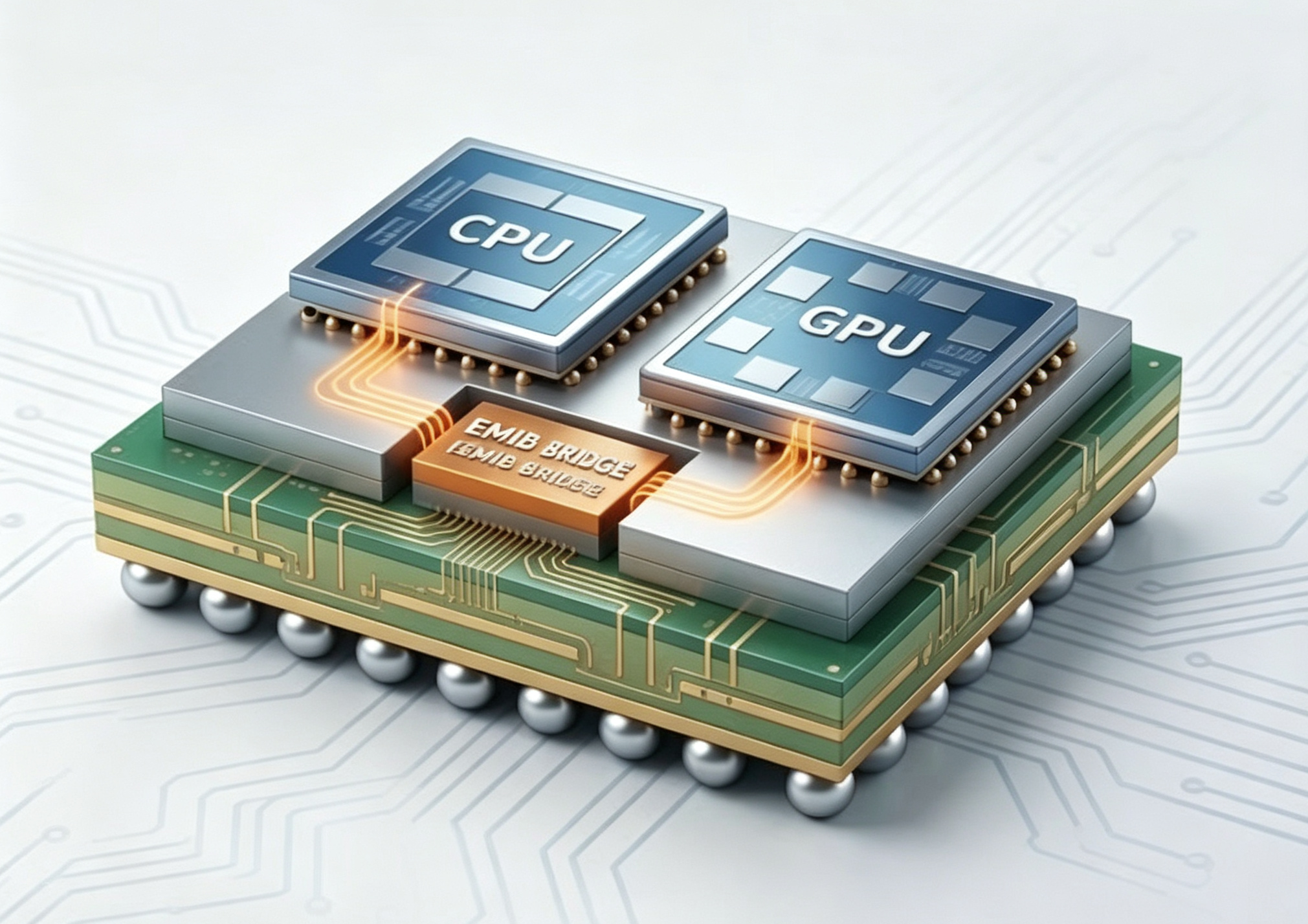
Intel’s EMIB technology uses embedded silicon bridges to connect different dies. By utilizing relatively small silicon bridges instead of large silicon interposers used in some conventional packaging approaches, EMIB can support HBM integration and chiplet architectures while enabling high-bandwidth, low-latency die-to-die connectivity.
As AI and high-performance computing continue to move toward chiplet-based architectures, packaging technologies capable of flexibly integrating compute dies with HBM are becoming increasingly important. SK hynix’s inclusion of EMIB as an option for next-generation HBM demonstrates Intel’s growing presence in the advanced packaging market.
Competition in Advanced Packaging Intensifies
TSMC continues to maintain significant scale and customer advantages in advanced packaging. However, as demand for AI chips continues to expand, the need for advanced packaging capacity is also increasing rapidly. SK hynix’s adoption of Intel’s EMIB highlights how major semiconductor companies are actively seeking additional packaging technologies and supply sources.
From a supply chain perspective, future competition in advanced packaging will extend beyond individual packaging technologies to encompass capacity, yield, cost, thermal performance, chiplet integration, and overall supply chain flexibility.
Overall, SK hynix’s inclusion of Intel’s EMIB in its next-generation HBM roadmap represents another important development for Intel’s advanced packaging business and further underscores the growing importance of HBM and advanced packaging in the AI era. As demand for AI computing continues to expand, advancements in packaging technologies and capacity expansion will remain key areas to watch across the semiconductor industry.